

Spring is Here … But Your Body is Still Catching Up

Why Spring Hits Harder Than It Should
In Chinese medicine, this is the season of the Liver — a time of rising energy and upward movement. When that flow is unobstructed, we feel clear-headed, emotionally even, and physically at ease. When it’s stuck — which winter’s cold and contraction tends to encourage — we feel it as bloating, sluggishness, mood swings, or that particular fatigue that sleep doesn’t fix.
Spring asks the body to shift gears quickly. If your qi isn’t moving freely yet, that demand can show up as allergy symptoms: sneezing, runny nose, itchy eyes, sinus pressure, even digestive disturbance. The body is trying to release and expand, but it doesn’t quite have the runway to do it.
A Word About Sour Foods
Spring’s association with the Liver leads a lot of people to reach for sour foods — lemon water in the morning, apple cider vinegar, citrus tonics. The logic seems reasonable: sour is the flavor of the Liver, so sour must support it.
Not quite.
The sour flavor in Chinese medicine is primarily astringent — it contracts and draws inward. That’s genuinely useful in the right context, for the right person. But when the problem is stagnant qi that needs to move, an astringent flavor can work against you, tightening what’s already stuck and compounding the congestion rather than relieving it.
If you’ve been faithfully drinking lemon water all spring and wondering why you still feel sluggish — this may be why.
What Actually Helps: Chen Pi
Long before “functional food” was a marketing buzzword, there was Chen Pi (Citri Reticulatae Pericarpium)— dried tangerine peel. First documented in the Shennong Ben Cao Jing, one of the oldest medicinal texts in history, Chen Pi was never just a supplement. It was woven into daily life — brewed into teas, stirred into soups, tucked into herbal formulas, cooked with meat to ease digestion.
“In China, Chen Pi doesn’t sit in a medicine cabinet. It lives in the kitchen — simmered into broths, stirred into congee, brewed into everyday tea. It’s less something you take and more something you just… do.”
Its job in TCM is to move qi and resolve dampness. When digestion feels heavy, when the lungs feel congested, when things just seem stuck — Chen Pi gets things moving again. It works with the body’s natural direction in spring rather than against it.
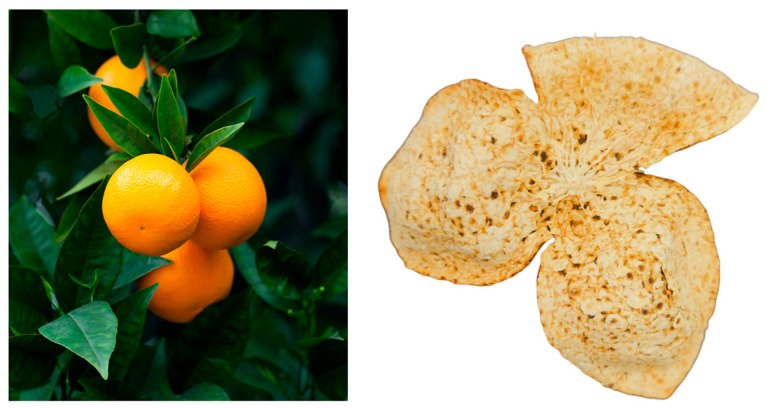
Citri Reticulatae
A 2024 review in the journal Foods confirmed what practitioners have understood for centuries: the peel contains a complex of bioactive compounds — flavonoids, volatile oils, and pectin — with demonstrated antioxidant, anti-inflammatory, and digestive benefits. The specific flavonoids hesperidin and naringin have been studied for their anti-allergic properties, showing an ability to lower the body’s IgE response and inhibit histamine activity.
Dried Chen Pi is available year-round at Chinese grocery stores and herb shops. In Chinese medicine, it actually improves with age — peel dried for three or more years is considered fully medicinal grade. A strip steeped in hot water, added to congee, or simmered into broth is a quiet, consistent habit that asks very little.
As Aristotle put it: the whole is greater than the sum of its parts. Chinese medicine has always understood this. The peel isn’t a workaround — it’s the point.
When It’s More Than a Season
If spring allergies are a recurring story for you — the same sneezing every April, the same fog, the same feeling that your body is overreacting to the whole world — that pattern is worth a closer look.
Chinese medicine doesn’t just manage symptoms season to season. It looks at why your system keeps responding this way, and works with that underlying pattern over time. Acupuncture, herbal support, and a clearer picture of your constitution can make a meaningful difference — not just this spring, but in the ones that follow.
If you’d like to explore that, I’d love to help. Book an appointment — spring is a good time to start the conversation.
Wishing you a smooth and unobstructed spring.
Dr. Samantha Hewwing, DACM, LAc, Dipl OM
Hewwing Acupuncture & Herbal Medicine
32 Union Square East, Suite 814A, New York, NY 10003
hewwingacu.com | 917.837.8384